


Open menu Menu closed
e5c8e4ed36f6f81f95042aa61b4a97422f1ad93c | Bamboom | Bamboom

Does your little one not want a sleeping bag?
This might be the right one

It often happens that a parent comes to the conclusion that their Child “doesn’t want a sleep sack” because the first few attempts didn’t go well. In reality, before ruling it out entirely, it’s worth considering an important point:not all sleep sacks are the same, and not all children have the same needs.

For some children, the classic, more snug-fitting style can be reassuring and become a real cue associated with bedtime. Others, however, may be less tolerant of the feeling of restricted movement and do better with styles that allow more freedom for their legs.

The difference, therefore, isn’t necessarily whether a Child “accepts” or “rejects” the sleep sack, but may simply depend on the style chosen.

There’s no one-size-fits-all sleep sack. There’s the one best suited to the characteristics and needs of each Child.

 | Bamboom

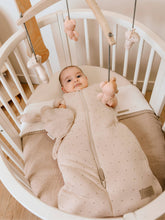
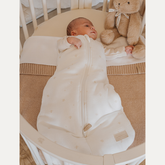
Classic Sleeping Bag: For Those Who Like to Feel Snug

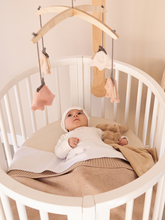
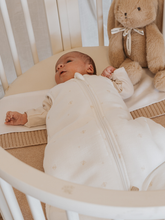
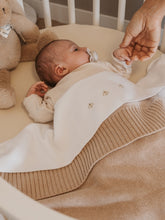
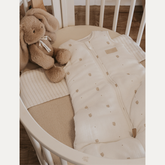
The classic sleep sack with legs together is the ideal choice for babies who find that being swaddled helps them relax.

Be aware, however, of one important detail: the classic sleep sack does not provide true swaddling for newborns, because it is not a swaddle—the legs are still fairly free. The sense of containment and “restriction” is felt most strongly by babies who have started rolling over and moving around, for whom that restriction becomes a helpful cue:now the body stops moving, now it’s time to sleep.

It is therefore particularly suitable for babies who move a lot during sleep and who, thanks to the sleeping bag’s gentle restriction, are able to stop fidgeting and let themselves drift off. 

Sleeping bag with legs: for those who need freedom

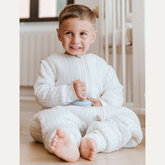
The Bamboom Sleeping Jumpsuit Combiwith separate legs is the right choice for a very specific group of children and situations.

Those who have just started rolling over, sitting up, pulling themselves up, or walking.Especially at the beginning of these motor skill developments, when movements are not yet fluid and automatic, the classic onesie can become a real physical obstacle. Child wants to move—not only does he enjoy it, but he often needs it—and being unable to do so makes him restless instead of calming him down.

For babies who move a lot, both when falling asleep and during the night.If your Child constantly changes position while sleeping and the classic sleep sack causes him difficulty every time he moves, nighttime awakenings will increase. With the legs separated, he can move much more easily without waking up.

For babies who can’t sleep on their backs.Safety guidelines recommend always placing the Child on their backs—and it’s important to do so. But in reality, not all babies can do this, and some parents find they have to accept that their baby rolls over during the night. In that case, a sleep sack with leg openings is the best choice because it allows for the movements needed to change position much more easily and safely.
 | Bamboom

Something many people don't think about: when to use a sleeping bag

There’s a mistake I often see people make, especially with children who are developing their motor skills: putting the sleep sack on right at the start of the bedtime routine.

The bedtime routine and the moment of falling asleep are two distinct moments—and it’s essential to keep them separate. The routine is a time for bonding, slowing down, and preparing for sleep. Falling asleep is the moment when the Child lets go.

If your Child is in the midst of a motor development phase and resists the sleep sack as soon as you enter the room, they may simply still need to move around. In that case, try this: a completely unrestricted bedtime routine, with the sleep sack only afterward, when it’s time to actually fall asleep.With this separation, many children who seemed to hate the sleep sack accept it without any problems—because in the meantime, they’ve had the time and space to let off steam.

And at that point, it’s worth observing: once the need for movement has been satisfied during the routine, does your Child prefer the confinement of the classic sleep sack to fall asleep, or does he still prefer the freedom of movement? The answer will tell you which model is right for him.

A note on the bedtime routine: if you aren’t doing one yet, it might be worth considering—not just for the sleep sack, but because it’s one of the most powerful tools we have to help children fall asleep more peacefully. 

 | Bamboom

Why I Prefer a Sleeping Bag: My Thoughts as a Sleep Consultant and Mom

No matter which style you choose—classic or with little legs—I always use a sleep sack instead of a blanket. It makes me feel safer, and the babies don’t kick off their covers during the night.

International guidelines for SIDS prevention state that the cot should be completely empty during unsupervised sleep. A loose blanket can shift and end up over the baby’s face Child. The sleep sack—in both styles—eliminates this risk: the Child is always covered, the head remains uncovered, and there’s nothing that can move inside the cot.

Preferences may change over time

It’s worth remembering: the right model today might not be the right one in six months. Preferences change as children grow, go through different developmental stages, and their temperament becomes more defined.

A Child who, in the first few months, loved the snug fit of the classic sleep sack might, around 8–10 months, start to fuss—because in the meantime, they’ve learned to roll over, and that snug fit no longer soothes them; it makes them restless. The opposite can also happen: a Child who seemed to need freedom might, once past the most intense motor development phase, find a new source of comfort in the classic sleep sack.

Observing your Child without preconceptions—and being willing to adapt—is always the best approach.

In conclusion

If your child refuses the sleep sack, don’t give up right away. First, ask yourself:
🌙 Is your child going through a phase of intense motor skill development?
🌙 Do you put it on during the bedtime routine or only when your child is falling asleep?
🌙 Are they resisting because they feel restricted, or are there deeper issues at bedtime?

The answers to these questions will tell you whether it’s a matter of choosing the right model—and which one to pick—or whether it’s worth taking a closer look at their sleep habits. Either way, there’s always a solution.

Sweet dreams 🌙

By sleep consultant Federica Diaco

Federica Diaco is afamily consultant specializing in the sleep of children ages 0 to 6. An Italian native, she trained in the United States and now works with families both online and in person, in Italy and Florida.

She is a certified pediatric sleep consultant, trained in the method of Kim West—The Sleep Lady—and regularly participates in continuing education courses on the latest research regarding children’s sleep.

Her approach is empathetic, nonjudgmental, and respectful of the pace, development, and needs of each Child and their family.