








Does being held in someone's arms hinder motor development?
No. We can meet the “ Child ’s” need for closeness and, at the same time, support their motor development.
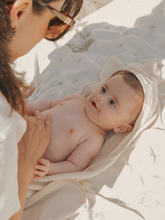
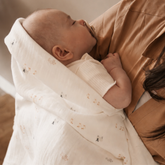
Being carried allows the “ Child ” to perceive the adult’s movements, experience constant changes in position, and receive a wealth of sensory information. Even when in a wrap or baby carrier, their body is challenged to adapt to the movements of the person carrying them, gradually contributing to the development of postural control.
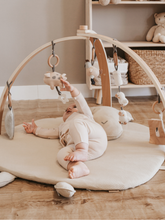
This experience goes hand in hand with free movement: throughout the day, it’s important to also give the Child opportunities to explore their own body independently on the mat—on their back, on their stomach during Tummy Time, and, as they grow, in the various positions they’ll gradually be able to achieve. These are different yet complementary experiences. The key word isvariety.
Baby sling or baby carrier?
Both allow you to carry your Child close to your body, but they have different features.
Thewrapis a soft, snug, and highly adaptable carrier that conforms to the body Child. This is precisely why it is particularly suitable during the first few months, when postural control is still developing.
Thebaby carrier, on the other hand, is a more structured carrier. Today, there are ergonomic and adjustable models that can also be used in the first few months, provided they are truly suited to the size of the Child and adjusted correctly.
In both cases, a simple principle applies:the carrier must adapt to the Child, not the Child to the carrier.
The thighs should be adequately supported, and the hips should be free to remain flexed and spread apart, with the knees generally higher than the buttocks, without forcing a predetermined position.

Yes, wear a mask—but don't forget about freedom of movement
Baby slings and carriers can therefore be invaluable allies in everyday life and provide a unique experience for the Child, but they should be part of a day filled with a variety of different opportunities.
The Child needs physical contact, but also space to move their arms and legs freely, experience “Tummy Time,” reach for an object, and—as they grow—roll over and move around.
There’s no need, therefore, to choose betweenkeeping them close and guiding them toward independence. In the first few months, independence doesn’t come from separating the Child from adults too early, but rather from offering them security and, gradually, ever-new opportunities to explore their own bodies.